Home › Industrial and Heavy-Duty Asphalt Paving
We deliver industrial asphalt paving in Fort Wayne, IN for truck yards, docks, and high traffic loading areas. Thicker asphalt sections, strong base design, and tight compaction help our heavy duty pavements stand up to constant turning and heavy axle loads. Site specific designs reduce maintenance and downtime.
Precision Asphalt Fort Wayne provides professional industrial asphalt paving throughout Fort Wayne, IN, Indiana and the surrounding area. Our licensed, insured crew delivers safe, clean, on-time work with a free estimate before anything begins. Call (260) 408-6873 or request your free quote.
Industrial Asphalt Paving Built for Fort Wayne Workloads
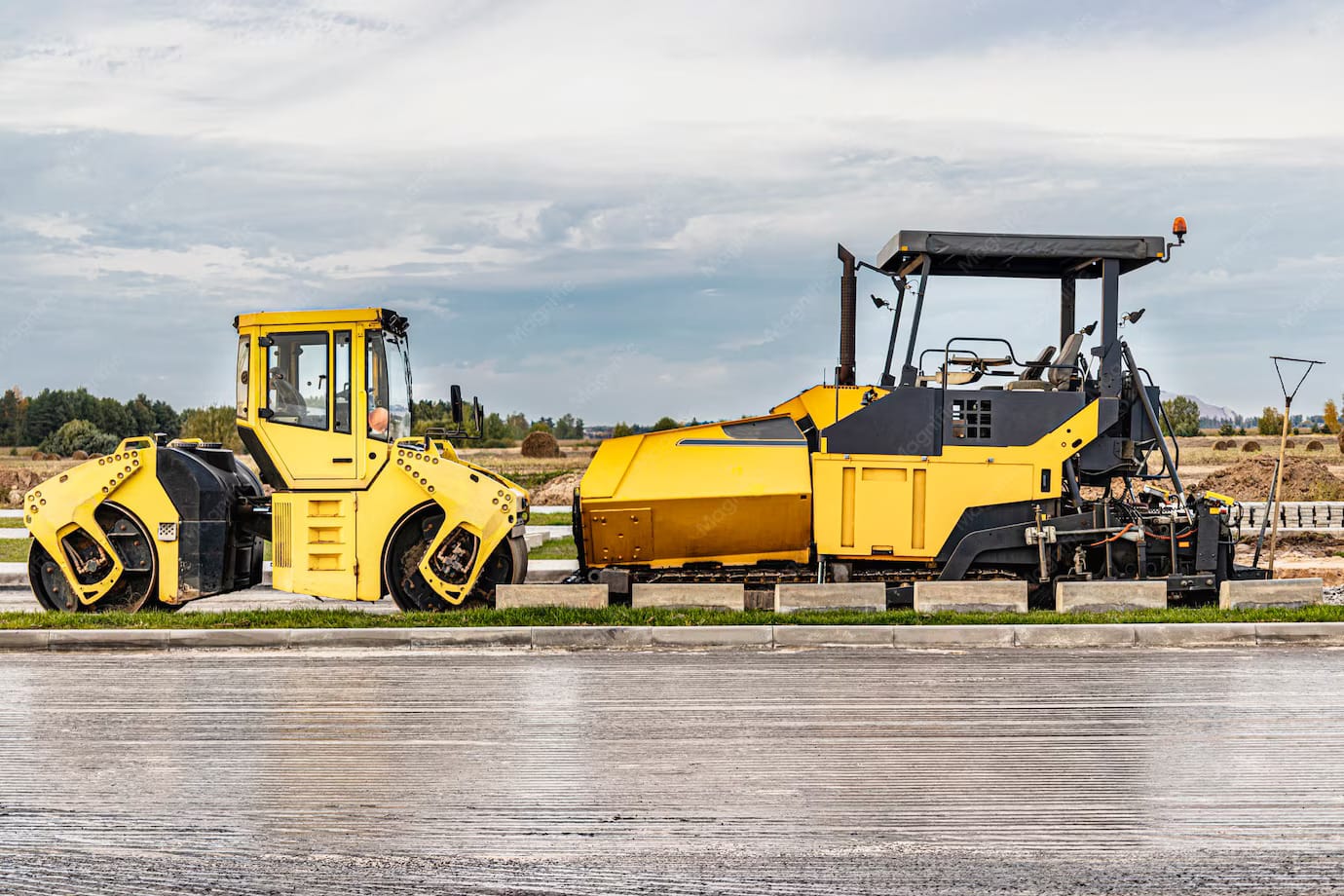
Industrial asphalt paving is very different from a basic parking lot. At Precision Asphalt Fort Wayne, we design and build pavements that can handle forklifts, loaded semis, container stacks, and continuous heavy traffic without rutting or breaking apart.
In Fort Wayne and the surrounding industrial corridors, we most often pave for distribution centers, manufacturing plants, truck terminals, utility yards, and material storage areas. Each of these sites loads the pavement differently. A forklift aisle that turns in the same spot all day needs extra thickness and a different mix than a straight truck lane. We start every project with a site walk, traffic review, and soil evaluation so we can recommend the right structure for your specific operation instead of guessing from a generic chart.
Our goal is to give you an industrial pavement that does not just survive the weight, but also makes your operations smoother, reduces vehicle wear, and stays safe in our Northeast Indiana freeze and thaw cycles.
How We Design Heavy-Duty Pavement Structures
For industrial asphalt paving, the structure beneath the surface is as important as what you see on top. Our design process starts with a subgrade check. In many Fort Wayne industrial areas, especially reclaimed farm ground or older rail properties, native soils include soft clays that hold water. If the soils are weak, we may recommend undercut and stone replacement, soil stabilization with cement or lime, or a thicker aggregate base to prevent long-term settlement and pumping.
Once the base strategy is set, we calculate asphalt thickness based on your heaviest loads, frequency, and wheel paths. Heavy-duty loading areas typically receive 6 to 10 inches of total asphalt in multiple lifts, compared to 3 to 4 inches for light-duty parking. In high-stress locations such as loading docks, dumpster pads, and fuel islands, we often specify full-depth asphalt or a reinforced concrete pad tied into the asphalt to prevent rutting and shoving.
Mix selection matters too. Indiana DOT-approved heavy-duty mixes (such as high-stability surface and intermediate courses) resist deformation better under slow, turning truck traffic. For many industrial clients we avoid overly smooth, car-park style surfaces near docks and ramps and instead use mixes that balance skid resistance with durability so operators have traction in wet or icy conditions.
Our Step-by-Step Industrial Paving Process
Every heavy-duty project with Precision Asphalt Fort Wayne follows a structured process so you know what is happening and why.
1. Site evaluation and planning: We review existing pavement or soil conditions, drainage paths, utility locations, and your current traffic patterns. For operating facilities, we coordinate phasing so trucks, employees, and emergency access can keep moving while work is done.
2. Grading and drainage: We shape the subgrade and aggregate base to move water away from buildings, docks, and loading areas. In Fort Wayne winters, standing water quickly becomes ice, so we pay close attention to slopes around overhead doors and walkways. We incorporate swales, inlets, or underdrains if the site has poor natural drainage.
3. Base construction: We install and compact dense-graded aggregate in controlled lifts, using vibratory rollers and plate compactors around structures and tight spots. Industrial pavements rely on this layer for strength, so we proof-roll with loaded trucks when needed to identify any soft spots before paving.
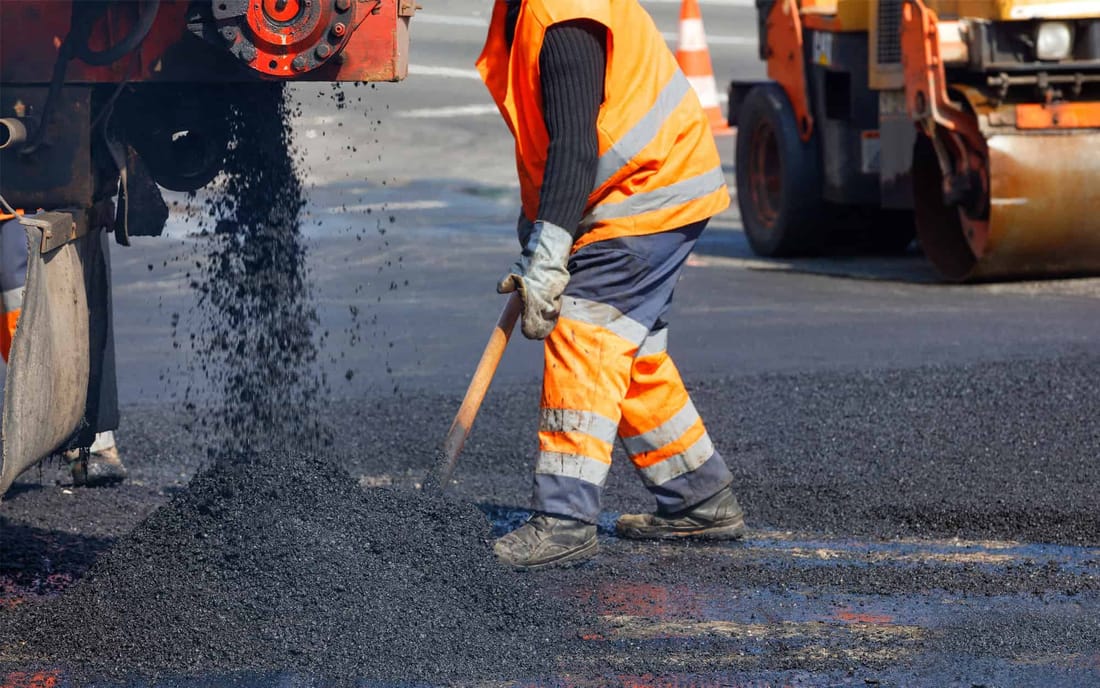
4. Asphalt placement in multiple lifts: For heavy-duty sections, we typically place a strong base or intermediate course first, then a surface course designed for traffic and weather resistance. Each lift is placed at the right temperature, compacted to target density using steel and pneumatic rollers, and checked for joints that are tight and well-tied so seams do not ravel.
5. Finishing, striping, and safety markings: Once the pavement cools, we add striping, truck lane markings, dock numbers, stop bars, and pedestrian routes according to your site plan. For some industrial clients we also apply specialty markings such as staging zones, forklift-only areas, or color-coded safety zones around loading pits.
6. Final walkthrough and maintenance plan: We walk the site with you, note any special areas that need additional curing time before heavy loads, and provide a tailored maintenance schedule based on your traffic and budget.
Local Conditions That Affect Industrial Asphalt in Fort Wayne
Northeast Indiana has a freeze-thaw climate, occasional lake-effect snow, and extended periods of moisture. These conditions are hard on pavement, especially where heavy trucks and equipment concentrate stress. At Precision Asphalt Fort Wayne, we design industrial asphalt paving with local weather in mind.
One key factor is drainage. Many sites around Fort Wayne, New Haven, and the I-469 loop sit on relatively flat ground. If slopes are not carefully established, meltwater can sit along loading docks or in rutted drive aisles and then freeze. That leads to surface cracking and safety issues. We build in positive drainage, consider where snow piles will go, and reinforce those pile zones because repeated plowing and thawing can damage weaker pavement.
Another local issue is existing pavements that were originally built for far lighter use, then gradually pressed into industrial service as operations grew. We frequently see old car-park style lots now carrying daily semi traffic. In these cases, we may recommend partial-depth reclamation, full-depth reconstruction in heavy truck lanes, or structural overlays in lighter areas to stretch your budget while still addressing the worst failures.
Deicing practices also matter. Industrial facilities often use both road salt and specialty products near docks and walks. We select asphalt binders and surface mixes that perform well with these treatments and suggest crack sealing schedules that minimize salt infiltration into the base during winter.
Cost Drivers and Options to Control Your Budget
Industrial asphalt paving is an investment, and we are upfront about what drives cost so you can make clear decisions.
Major cost factors include existing pavement condition or soil strength, total asphalt thickness, size of the project, drainage and underdrain needs, and phasing around your operations. For example, rebuilding a failed truck court on weak clay with full-depth reconstruction and underdrains will cost more than overlaying a generally sound surface. However, sometimes a thicker new structure in high-stress areas can save money long term compared to repeated patching.
For many Fort Wayne industrial customers, we build a mixed approach. Heavily loaded turning areas near docks, dumpster pads, and fuel or scale approaches receive full reconstruction with thicker asphalt or integrated concrete sections. Through-lanes that see moving but not stationary loads might get a structural overlay instead. Employee parking or overflow storage areas can often be value-engineered with slightly thinner sections or different mixes while still being reliable.
Phased construction can also control cost by reducing disruption. Working in segments allows you to keep critical dock doors or entrances open, which can be less expensive than shutting down operations or bringing in temporary logistics solutions. During planning, Precision Asphalt Fort Wayne will walk through options such as night or weekend work, temporary traffic shifts, and staging to keep your facility productive.
Maintenance, Repairs, and How to Get the Longest Life
Even the best industrial asphalt paving needs some care, especially in Fort Wayne's climate and with heavy equipment traffic. We help you plan realistic maintenance so your pavement structure lasts as long as possible.
Within the first year, it is normal to see slight surface scuffing from tight forklift or truck turns, especially in hot weather. This is usually cosmetic. What matters more is watching for early cracking at joints, ponding water, or settlement near catch basins. Addressing those issues fast with localized patching or leveling can prevent more serious failures.
After a few seasons, a regular crack sealing program becomes critical. Cracks are natural as pavement ages, but if they are allowed to stay open, water and deicing chemicals will reach the base and weaken it. We typically recommend annual or biannual crack inspections, especially in high-volume truck yards and distribution centers.
For many industrial facilities, sealcoating is not about appearance alone. On some heavy-duty surfaces we may limit or modify sealcoat use, focusing instead on targeted crack sealing and timely overlays to preserve structure. When the time comes for rehabilitation, we evaluate whether a mill and overlay can restore performance or whether underlying base failure requires deeper repair.
When you contact Precision Asphalt Fort Wayne, we can review your existing industrial pavement, explain where it stands in its life cycle, and outline a practical plan that fits your operation, whether you need a full rebuild, strategic strengthening of critical paths, or just a solid maintenance program to get more life out of what you already have.